
Pasture Monitoring
This installation demonstrates the application of the Scelaris approach to livestock monitoring, using camera-based detection and vision-language models (VLM) to provide operational context for animal movement and behavior.
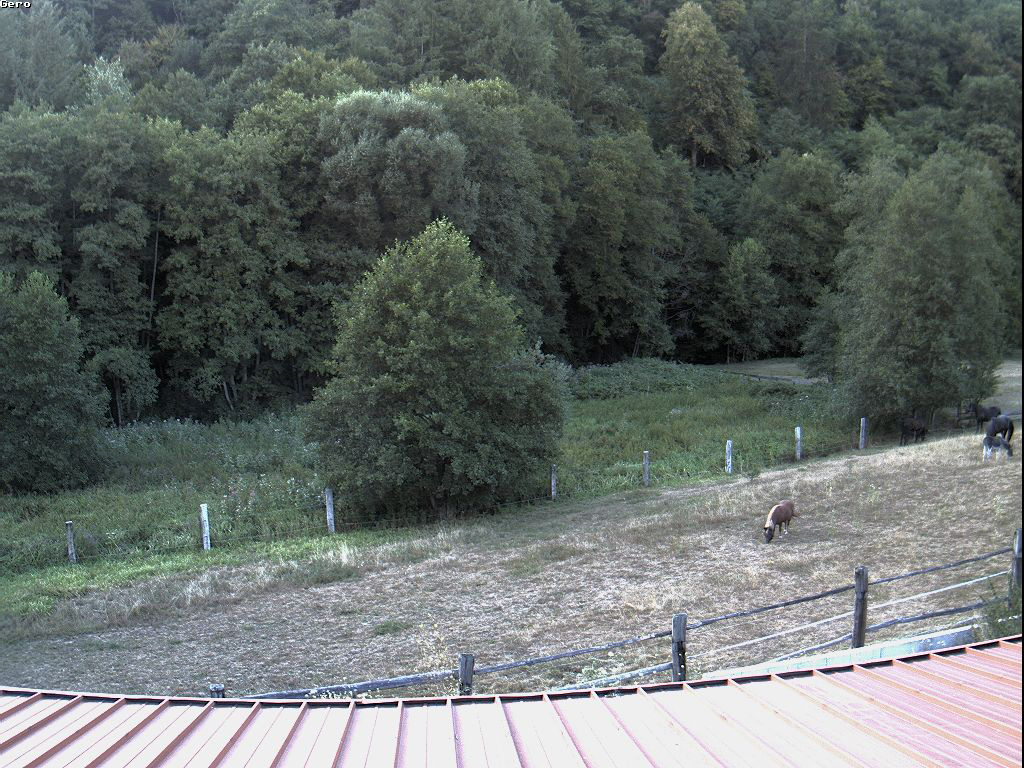
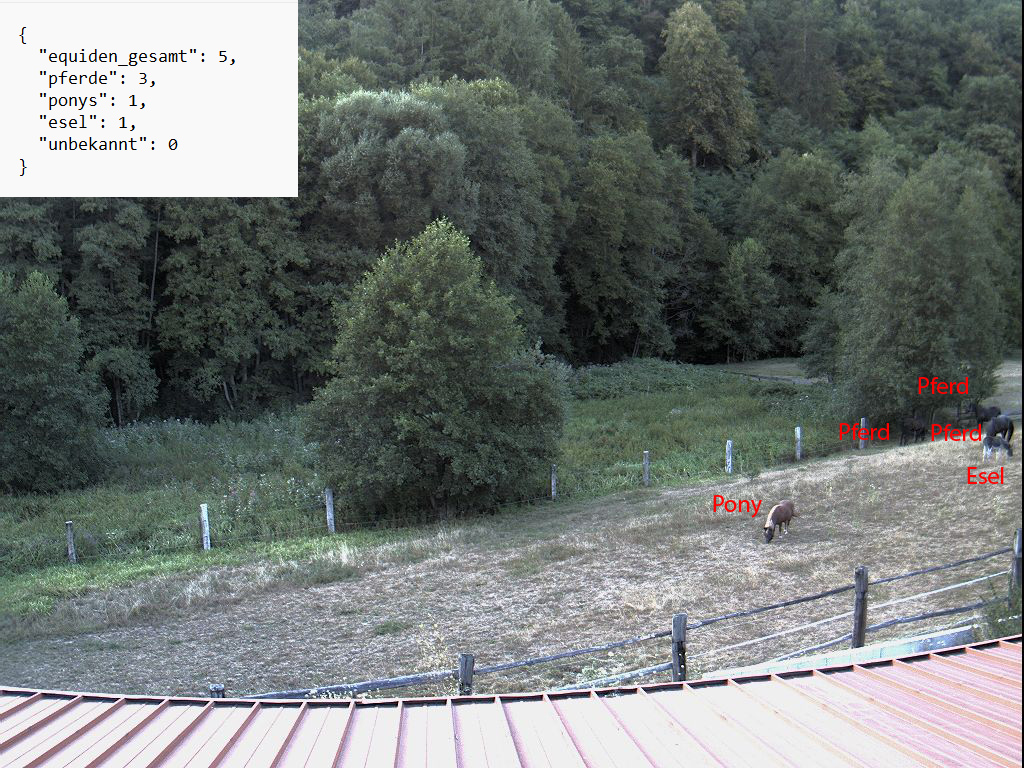
Detect and distinguish individual equines visible in camera/event images and determine whether the event contains relevant information.
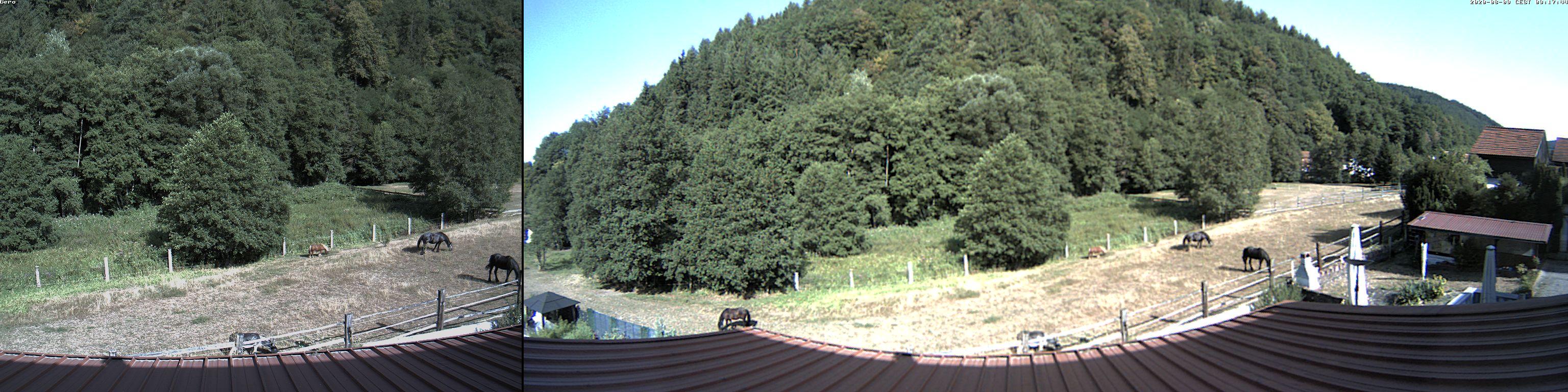
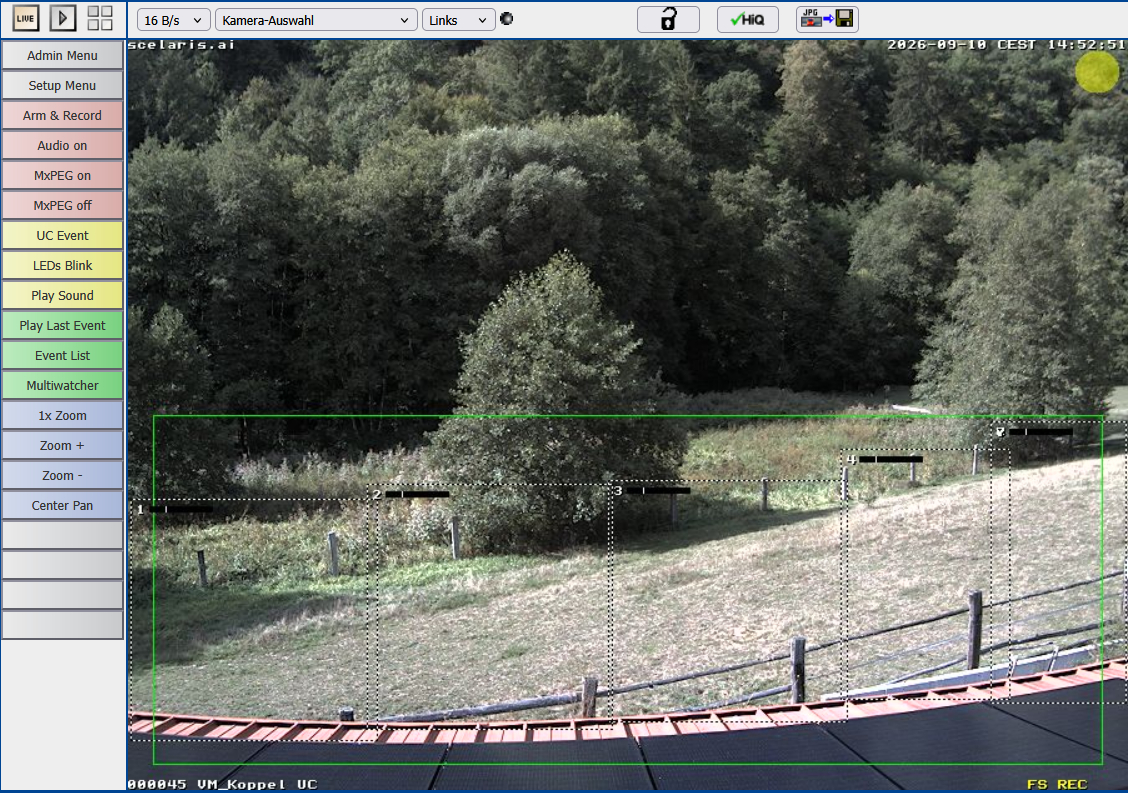
A dual-sensor MOBOTIX camera provides event images or live imagery. Images enter the processing workflow through camera-generated alerts, email, or direct file-server transfer.
The camera captures/detects the event. Server-side processing uses a vision-language model (VLM) to analyze the image and identify/assign the visible animals. The analysis result is then converted into an operational action.
Relevant alerts can be enriched with the analysis and forwarded for human attention. Non-relevant alerts can be discarded. Image archiving is independent of whether an analyzed alert is forwarded.
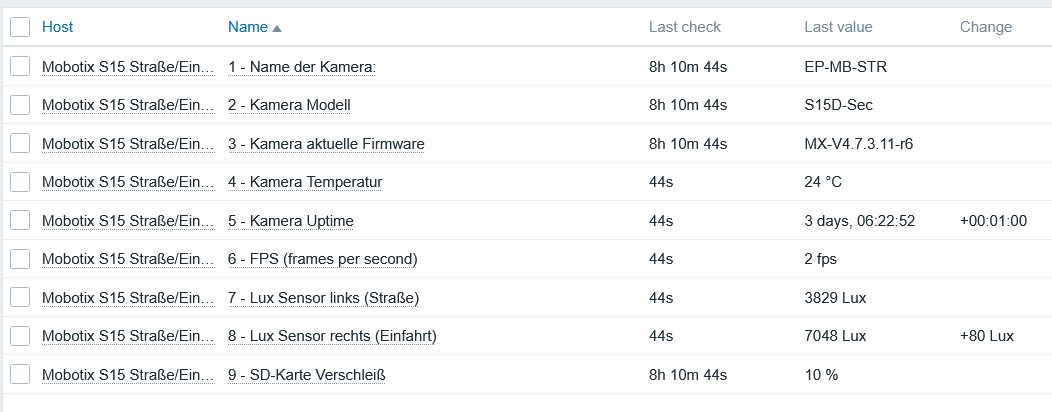
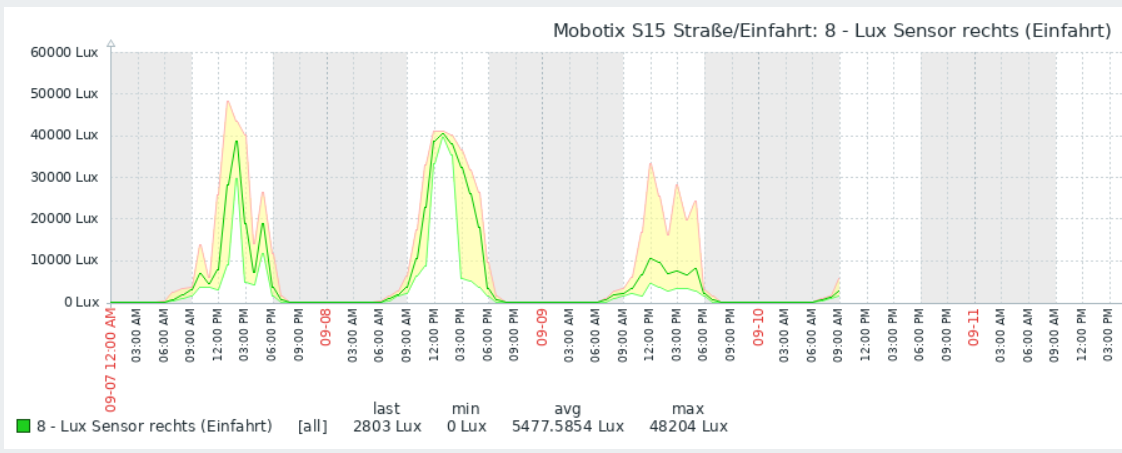
Zabbix independently monitors the MOBOTIX camera and relevant operational parameters, including system/vital parameters and illumination-related values.
The human decision-maker receives contextualized information rather than only an unexplained camera alarm or raw image, supporting a quick and informed decision.